

The Marcha das Mulheres Negras por Reparação e Bem Viver (Black Women’s March for Reparations and Buen Vivir)1 is a political and social movement that unites Black women from across Brazil to fight against racism, violence, and inequality.
We demand historical reparations, the assurance of Buen Vivir, the right to a dignified life with access to health, education, decent working conditions, and the building of a more just future for society as a whole. A decade after bringing over 100,000 women to Brasília, we return to the streets with even greater force. On November 25, 2025, we will gather voices from all corners of the country in a political action with global reach. It is in this context of mobilization and collective organizing that we bring forth our Economic Manifesto, a collective political project laying out pathways to economic justice grounded in our lived experiences and proposals.
The Economic Manifesto of the Black Women’s March is a collective political project. It is a project because it sets out to envision a new framework for economic relations in Brazil. It is political because, even amidst grave civilizational setbacks, it reaffirms the urgent need for reparations and Buen Vivir as essential for the regeneration of social, political, and economic relations between the Black population and the State, its institutions, companies, funders, philanthropists, civil society organizations, and other actors within Brazil’s institutional landscape. It is collective because it was crafted by many hands – bringing together more than 300 Black women from every region of Brazil through six virtual workshops, five interviews, and over 200 asynchronous contributions submitted via forms, text reviews, and emails. Created with deep respect, the Manifesto honors diverse knowledge, experiences, and perspectives. It recognizes its own limitations and is therefore founded on the premise of constant evolution; it seeks to serve as a starting point for repositioning the intersection of race, gender, and economics both nationally and internationally.
We, Black women workers of this country, raise our voices to contest the direction of Brazil’s economy – a nation that belongs to us, yet continues to build its wealth on our labor while denying our place at the center.
We are many and multiple. We are mothers, heads of households, and breadwinners of every sexual orientation and gender identity. We are daughters of domestic workers, street vendors, farmers, midwives, shellfish gatherers, and fisherwomen. Of nurses, teachers, caregivers, and cooks. Of seamstresses, factory workers, artisans, and public servants. Of mães de santo, community leaders, and so many others who, across countless fronts, have sustained – and continue to sustain – this country through their labor. From small businesses, from family homes, from public service and philanthropy; from the waters and forests, from quilombos, terreiros, the countryside, and the cities.
We are these very workers ourselves – those who carry the country’s daily life on our shoulders through invisible and unequal labor. The Brazilian economy is built upon our bodies and territories, yet it rarely recognizes us as central agents in this history. From our lived realities – shaped by race, gender, class, sexuality, and territorial identity – emerges the transformative power of a different economic horizon.
When food prices rise, it is our plates that go empty. We are the ones standing at the stove – from restaurants to people’s homes – yet we must juggle every coin at the supermarket to make sure everyone eats until the end of the month.
When unemployment persists, we are the ones who, without fear or safety, turn to informal work to feed our families. Without social protection, without leave, without vacations or a 13th salary, we set up our trays in the street and sell lunch to afford dinner.
When interest rates spike, slashing our purchasing power, we are the ones most cruelly thrown into debt and joblessness. When public budgets are cut, we are the ones left without access to essential services – housing, healthcare, education, transport, and more.
When poverty and insecurity spread, we are the targets of escalating violence -from crime and from the State alike. When electricity, water, and sanitation systems fail, it is in our neighborhoods, in our homes. When floods destroy or storms sweep away houses, it is the same story.
When agribusiness expands mercilessly, it’s our territories – the ones we fight so hard to protect – that are threatened. When territorial marginalization endangers the safety and Buen Vivir of Black LGBTQIA+ women, imposing violence and urban displacement that push them into spaces of economic segregation, we are the ones who resist and rebuild.
When climate emergencies strike – droughts, floods, cold waves, or heat waves – their effects are never evenly distributed. The hardest hit areas are the Black and peripheral ones. There, it is Black women, especially those leading their households, who face the gravest impacts: they lose more, have less access to support, and bear even heavier responsibilities that were already unjustly distributed.
It is from this lived reality that we raise our voices.
We demand reparations. This means recognizing and confronting the debt accumulated over centuries by the Brazilian State, by financial institutions, corporations, and all other actors who profited from slavery and the expropriation of Black populations. This responsibility extends across the entire post-abolition period and through successive republican eras, all marked by the absence of reparative measures and the perpetuation of structural inequalities. To repair is to publicly acknowledge this debt, to preserve the memory of slavery and racism, to return expropriated resources, to create guarantees of non-repetition, and to implement concrete measures of compensation. It also means carrying out agrarian and urban reform to ensure access to land, housing, and the titling of quilombola territories and other traditional communities, as well as expanding and institutionalizing affirmative action policies as permanent mechanisms of racial justice. These reparations cannot be conceived without the active involvement and political leadership of Black women, who must be at the center of shaping a new economic and social pact committed to justice and dignity.
We demand Buen Vivir. This means affirming a political and civilizational project born from the lived experiences and collective memories of Black, Indigenous, and traditional peoples. It is a daily practice that reorganizes life around the centrality of existence, care, and community – in opposition to the logics of exploitation, racism, and capitalist accumulation.
From an economic perspective, Buen Vivir means placing life above profit, recognizing that labor cannot be the sole foundation structuring society; redistributing wealth; valuing care as essential and foundational work; recognizing nature as a subject of rights, preserving forests, rivers, waters, and soils for future generations; and replacing market-driven individualism with practices of community and solidarity. Having time to live, to eat well, to care and be cared for, to work without exhaustion, to walk freely in protected territories, and to build networks of solidarity are rights that are not up for negotiation.
For us, reparations and Buen Vivir walk hand in hand. To repair is to confront Brazil’s historical debt to its Black population; Buen Vivir is to transform that reparation into a future where dignity, justice, and community form the solid ground from which we exist and build collectively.
We have long denounced what the statistics make explicit: we, Black women, represent the highest levels of economic and social vulnerability in Brazil. Nearly 80% of women in the country are in debt, and about 30% are overdue – often because their debts were incurred to buy food and ensure daily survival. This indebtedness, which has worsened since the pandemic, continues to grow under the weight of high interest rates and declining income. Among Black women, precariousness is even more severe: 63% of households headed by Black women live below the poverty line; nearly half of us work in informal conditions without labor rights or social protection; and 21% of employed Black women are unable to contribute to social security. We also make up the majority of domestic workers and other low-wage occupations (IBGE, 2022).
The result is a stark portrait of inequality that runs through our lives: we are the ones who sustain this country, yet we are the ones who bear the highest costs of exploitation, poverty, and economic exclusion.
To this country – so accustomed to seeing us in the worst statistics – we declare: we stand together, alive, and are building better futures.
We are also the hands and minds forging new collective paths.
We are active in the solidarity economy, organizing cooperatives, credit funds, and support networks that create income and dignity where the State has failed. We are present in political advocacy – the force behind the enactment of the Quotas Law, the allocation of campaign funds for Black women candidates, and affirmative action policies that have transformed the makeup of universities and the public sector.
We are in healthcare, in the struggle that secured the National Policy for the Comprehensive Health of the Black Population, and we continue to demand action to address the maternal mortality of Black women. We are in culture and memory, preserving terreiros, quilombos, and artistic expressions that are not only heritage, but also technologies of the future. We are on the front lines of environmental racism, defending territories, forests, waters, and cities against the advance of speculation and destruction. We are in the public debate, leading discussions on reparations, Buen Vivir, and new economic pacts grounded in justice and redistribution.
We are the ones keeping alive the work of building a Brazil that does not yet exist – but is already being seeded by our hands.
That is why we now raise our proposals – organized into seven axes that bring together our demands and pathways to transform Brazil’s economy and the lives of Black women, presented below.
AXIS 1 – ECONOMIC AND INSTITUTIONAL REPARATIONS
Institutional reparation means mobilizing efforts to confront the economic looting that perpetuated slavery and racism in Brazil. It is about redistributing wealth, taxing privilege, holding institutions accountable, and ensuring resources reach Black women. This demands concrete steps to counter the financialization of life and establish stable mechanisms that protect our gains from setbacks. Here we declare: to redistribute is to enact historical justice.
1.1. Taxing large fortunes, inheritances, and high incomes to fund reparations
Implement progressive taxation on large fortunes, inheritances, profits, and dividends. This is essential to redistribute wealth, reduce historical inequalities, and return to Black people a portion of what was systematically taken. Taxing those who concentrate wealth and property means returning to society what has long been expropriated and ensuring permanent resources for public policies promoting racial justice.
1.2. Creating a National Fund for Economic Reparations
Allocate resources from the taxation of large fortunes, as well as revenues from assets and fines against companies and institutions that benefited from structural racism, into a permanent reparation fund. This fund should be managed by a joint committee with civil society participation and governance led by Black women, allowing us to set priorities and oversee accountability. These resources must be protected from cuts, contingencies, and austerity measures.
1.3. Establishing guarantees of non-repetition with economic conditions
Hold companies, banks, churches, and institutions accountable for historically and currently profiting from slavery, genocide, and the exploitation of our territories. This means enforcing collective reparation measures and making public credit, tax exemptions, and government licenses conditional on meeting anti-discrimination clauses – with verifiable goals, correction plans, and strict sanctions for noncompliance. There is no justice without concrete accountability.
1.4. Expanding affirmative action with budgets and indicators
Expand affirmative actions in public service, with specific policies for the admission, retention, and leadership advancement of Black women. These policies must include racial and gender equity indicators and monitoring mechanisms to ensure their effectiveness.
1.5. Recognizing climate justice as reparation
Acknowledge that confronting the climate crisis is inseparable from historical reparation. Black women are disproportionately affected by floods, droughts, and environmental disasters, but also lead survival and care strategies in their territories. Investing in climate justice means funding climate initiatives geared toward the most vulnerable communities, supporting climate adaptation that protects lives, and ensuring Black women participate in shaping environmental and economic policies.
1.6. Implementing a national debt forgiveness program with restart guarantees
Create a national program for debt forgiveness and negotiation for Black women in situations of heightened vulnerability, LGBTQIA+, victims of violence, and quilombola communities. This program should include free, accessible financial education and real credit history clearing mechanisms, so banks and financial institutions stop using renegotiated histories to block access to credit, investments, and financial inclusion.
1.7. Strengthening education and support networks
Invest continuously in the formal and professional education of Black women, from early childhood through to postgraduate studies. Reparative resources should expand access to universities, science, and technology, with policies that acknowledge and address racial inequalities from an early age. It is equally crucial to support collectives, solidarity networks, cultural initiatives, and Black memory as pillars of empowerment, knowledge production, and community ties.
1.8. Creating councils and territorial reparation bodies
Reparation policies must be built by those who bear the marks of historical debt. For this, it is necessary to establish councils and territorial bodies at the federal, state, and municipal levels, with mandatory representation of Black women. These bodies must have decision-making power, multi-year budgets, and responsibilities for designing, monitoring, and evaluating reparation policies, ensuring their continuity, effectiveness, and rootedness in local communities.
AXIS 2 – WORK AND INCOME
Brazil was built upon the expropriated labor of Black women – domestic, agricultural, urban, intellectual, and community labor, most often imposed, poorly paid, and unrecognized. To this day, we are the majority in the most precarious forms of employment and the minority in decision-making spaces. Repairing this historical debt requires radically transforming labor relations: guaranteeing dignified pay, formal contracts and social security, combating racism and sexism in the labor market, recognizing care work as foundational to the economy, and ensuring rights for all women workers in their diversity.
2.1. Ensure salary equity by race and gender
Compel the State and the market to ensure equal pay for equal work. This requires public disclosure of salary levels by job and grade, with data on race/color, and linking tax incentives for companies to concrete reductions in racial and gender job inequalities. This policy must be accompanied by regulation, active monitoring by the Ministry of Labor, and ongoing social oversight. Institutions that fail to comply should be penalized, while those that promote Black women should receive tax incentives.
2.2. Expand social security with racial justice
Create a simple and accessible system for self-employed workers, micro-entrepreneurs, and students to contribute with reduced rates, less bureaucracy, and easy tracking. Social security must cover maternity leave, sickness benefits, accident protection, and safety nets in crisis, pandemics, and disasters, promoting autonomy and dignity for Black women. The current model overlooks life expectancy inequalities: Black women live less and, even when they attain retirement, they enjoy retirement benefits for a shorter period. Thus, we advocate lowering the minimum retirement age, creating a universal pension for Black women over 50 without a formal contract, and specific rules for quilombola women, accepting community farming as evidence for rural benefits.
2.3. Regulate occupations held by Black women
Recognize and regulate occupations long worked by Black women, especially LBTQIA+ women. This includes establishing minimum wages, fair hours, rights, and access to productive credit. It is necessary to recognize foreign diplomas held by Black migrant women and value African-rooted knowledge, such as braiders, midwives, healers, and griots, affirming the dignity and continuity of these roles. This also includes domestic workers, day laborers, street vendors, rural and terreiro workers, who have historically sustained the popular economy without rights.
2.4. Recognize care as work
Acknowledge that care work – vital for the economy and life – is mostly performed by Black women. Occupations must be regulated and public and community facilities expanded, such as daycare centers, laundries, popular restaurants, senior and disability care centers. Invisible professions such as doulas, traditional midwives, and recyclable material collectors must be acknowledged as essential work, with social security, standard contracts, and simple registration. This acknowledgement must also encompass unpaid care work, which should be equally protected for those who sustain life without receiving wage. We demand a national time-use survey with international comparability, so Brazil exposes before the world the unequal burden on women and take responsibility to address it. Data collection must be matched by public campaigns urging men to take shared responsibility for care.
2.5. Protect women workers against exploitation
It is urgent to fight all forms of exploitation disproportionately affecting Black women, especially children, adolescents, pregnant women, and elders. This means tackling precarious work, harassment, child and unpaid domestic labor, grueling hours, and unsafe conditions normalized as part of women’s daily lives. We demand effective oversight, accountability for employers, and rights in all sectors. To repair is also to prohibit practices like 6-days-on, 1-day-off and reorganize work so life is not reduced to mere survival. Free time, rest, and self-care are key dimensions of the economy and must be recognized as part of Buen Vivir.
2.6. Value black entrepreneurship and the solidarity economy
Strengthen Black entrepreneurship and expand the solidarity economy. Black women have forged their own survival and community-support pathways, from formalizing small businesses to building solidarity networks. The State must recognize and support this, providing funding, training, technology, and marketing channels, while valuing cooperatives, associations, and community initiatives that keep territories alive.
2.7. Address the challenges of longevity
Build care policies for the elderly, supporting caregiving families and expanding public health and assistance services. Brazil already has over 35 million elderly people, nearly 5 million over 80 – a group that has grown up to 150% since 2000, increasingly dependent on permanent care. This work, largely relegated to Black women, must be recognized as a collective responsibility and sustained by public policies so aging means dignity and full rights – not abandonment or precariousness.
2.8. Professionalize activism and value black youth
Every day, thousands of young Black women build the foundations of the third sector and community organizations. They mobilize, organize, care for territories, and drive deep change, often with no contract, decent salary, or guaranteed rights. Turning activism into a professional pathway means acknowledging this work as legitimate, with labor protection, social insurance, and recognition. It is about ensuring Black youth can live with dignity while building the future for all.
2.9. Defend Public Service Workers
Ensure dignified conditions for public servants, recognizing that Black women are the majority in frontline of health, education, social services, and other essential fields. Yet, they face exhausting routines, precarious contracts, low wages, and weakened work conditions, often worsened by outsourcing and austerity. Repair is ensuring decent conditions for these workers, with stability, public service exams, fair pay, and recognition for the crucial roles they play.
2.10. Promote employability in strategic sectors
Investing in Black women’s employability is investing in the nation’s future. It is urgent to expand access to technical and professional training in strategic areas like technology, health, the green economy, and culture, through affirmative policies that tackle entry and retention structural barriers. Black women must be centered in transformative opportunities: holding roles in decision-making, innovation, and creation.
2.11. Fight patrimonial violence against Black women
Acknowledge property violence as an expression of economic racism to safeguard Black women’s financial autonomy. This violence appears in the confiscation of salaries, assets, benefits, and inheritances, undermining property rights and material security. The State must create mechanisms for protection, accountability, and reparation, with access to justice, legal support, and policies guaranteeing income and assets.
AXIS 3 – MACROECONOMIC AND FISCAL POLICY
The design of macroeconomic policy decides who lives with dignity and who continues to bear the cost of a system that concentrates wealth. For us, reparation and Buen Vivir mean breaking with a logic that socializes losses and privatizes profits. We want macroeconomics that puts life at the center – with fair credit, a protected public budget, progressive taxation, and popular participation. An economy that does not expropriate us but rather recognizes our historical role and fund collective futures.
3.1. Lower interest rates to ensure a dignified life
Keeping the Selic base interest rate at abusive levels makes credit expensive, suffocates small enterprises, discourages work, and pushes millions of Brazilian women into debt. Those who suffer most under this logic are Black women, supporting entire families with limited income and costly credit. Challenging high-interest rate policies is confronting an engine that perpetuates inequality and concentrates wealth. We demand monetary policy guided by life – not merely by the profitability of financial markets.
3.2. Easier access to credit
It is essential to ensure access to fair, simplified credit for Black women, with reduced rates, guarantees adapted to their realities, and criteria that don’t reproduce structural racism. Public banks must fulfill this strategic role – offering loans to strengthen women’s economic autonomy, cutting abusive fees, and expanding lines of popular productive credit. This includes dedicated lines for young Black women, trans women, quilombola women, and women entrepreneurs from marginalized areas, alongside training, technical assistance, and continuous support policies.
3.3. Shield the social budget
Fiscal rules must be reformed urgently to prevent essential policies from being first on the chopping block. Health, education, welfare, and social protection cannot be sacrificed for fiscal balance. There must be sustainable, stable resources for policies that support Black women in all their diversity – single mothers, mothers of neurodivergent children, elders, students, and workers. No fiscal adjustment can come at the expense of our survival.
3.4. Redirect expenditures and subsidies
A thorough review is needed of the fiscal benefits and subsidies that enrich large corporations without creating jobs or reducing inequality. The tax system should be a tool for justice: that means lowering taxes on popular consumer goods, boosting taxes on luxury goods, and reallocating public resources toward adequate food, dignified housing, accessible transportation, health, childcare centers, and productive credit. These are the areas that immediately transform the lives of Black women.
3.5. Break the debt cycle
It is urgent to create a National Debt Amnesty and Renegotiation Program that assists Black women at every stage of life: heads of household, elderly, retirees, students with FIES (student loan) debt, and families who have lost homes. Brazil’s credit policy cannot keep deepening inequality and penalizing those who have always had less. Beyond immediate relief, structural solutions are needed. We propose the creation of a Unified System of Popular Financial Education – ongoing in schools, with teacher training and community-based services for Black families. Financial planning must be an accessible, collective right, protected by the State, to guarantee real economic sovereignty.
3.6. Implement race and gender-sensitive budgets
The public budget must be a tool for reparation. This requires making it sensitive to race and gender – precisely identifying how much is invested, and where, in policies that directly impact the lives of Black women. Resources must be applied regionally, prioritizing urban peripheries, quilombos, traditional communities, and other long-neglected territories. Budget transparency, impact indicators, and permanent social participation must anchor this transformation. No public resource decisions should be made without listening to those who live daily with the effects of State omission.
3.7. Ensure Black women’s participation in macroeconomic decisions
Macroeconomic policy must serve the creation of formal, protected, well-remunerated jobs, with equal pay, labor and social security rights ensured for Black women. This demands that economic targets be tied to fighting structural inequalities and that dignified work is at the heart of economic justice strategies. Public investment must prioritize strategic, high-impact sectors like education, health, the care economy, and community infrastructure. Transformation starts in our territories – childcare centers, accessible public transit, comprehensive healthcare, and professional training are pillars for a future where the economy serves life.
AXIS 4 – DIGNITY
Dignity means having land, a home, food, health, transportation, and safety guaranteed. It is living with stability, not on the brink of improvisation. It means existing without our lives being shaped by deprivation, uncertainty, or violence. for us, dignity is inseparable from reparation; it is returning what was historically denied to us and ensuring we are never again the last in line.
4.1. Distribute land and productive assets
Reparation involves territory: without land, there is no freedom or future. It is urgent to accelerate the titling of quilombola territories, demarcate indigenous lands, and regularize traditional communities, including riverine, cabocla, and terreiro communities. It is also essential to recognize terreirosas sacred territories, protected and guaranteed by the State against depredation and violence, with access to tax exemptions and basic services. This redistribution must be accompanied by accessible credit, technical assistance, and infrastructure so that land means income, food security, sustainable businesses, and healthy territories. It also requires upgrading the peripheries, with infrastructure projects, public lighting, services, and secure housing.
4.2. Ensure safe and dignified housing
Promoting dignified and safe housing means confronting the racism that forces us into the worst living conditions. This requires prioritizing housing programs for black women, especially heads of households and elderly women, with reduced interest rates, affordable down payments, and credit for improvements. It also includes speeding up land regularization in favelas and peripheries, as well as inherited properties that often lose value for lack of documentation. Full housing only exists when combined with integrated policies for living well: nearby childcare, work opportunities, and quality public services.
4.3. Make healthy food a guaranteed right
Our tables remain shaped by scarcity, poor food quality, and food racism, which determines who eats what and at what cost. Confronting this means creating a National Program to Reduce the Cost of Fresh Foods, strengthening public procurement from family farming and agroecology, increasing regulatory stocks, and directly supporting community kitchens, popular markets, and Black women’s cooperatives. investment is also needed in productive backyards, community gardens, and local supply networks that sustain life in the territories. Eliminating taxes on staple foods and taxing ultra-processed and health-and environment-harming products is a minimum requirement for healthy food to be a guaranteed right for all.
4.4. Universalize access to water, energy, and sanitation
Making access to water, energy, and sanitation universal is recognizing that dignity begins with the basics, and that denying these rights perpetuates environmental and structural racism. This means providing decent sanitation in urban peripheries, traditional communities, and rural areas; expanding social tariff programs; and instituting full exemptions for families in extreme poverty. The funding for this infrastructure must come from sectoral funds and permanent public policies protected against cuts and discontinuity. No Black family should be condemned to live without clean water, affordable energy, treated sewage, and a healthy environment.
4.5. Ensure accessible and fair public transportation
Transportation is part of dignity: it cannot consume half one’s income or require hours of exhausting commutes for those already facing multiple work shifts. To make mobility truly a right, it is necessary to ensure socially fair fares, funded by those with the most privileges – like luxury cars, private jets, and yachts. Dignified mobility means being able to access the city safely and freely. This requires tackling harassment and sexual violence in public transportation, ensuring street lighting, investing in bike lanes, and providing quality collective transportation in the territories.
4.6. Restructuring the public security model
Brazil’s current public security arrangement is responsible for the ongoing genocide of the Black population, especially men and boys. We demand an end to this policy of death. Stop killing us. Stop killing our children and loved ones. It is urgent to move toward demilitarizing the police, cutting spending on violent operations, and investing in prevention and social policies rooted in the territories. This means confronting racist hyper-surveillance that criminalizes black bodies and communities, breaking with the punitive logic of the national drug policy, and allocating the proceeds from seized assets to funds for care, protection, and reparations.
4.7. Strengthening public health with racial justice
Health is a right, not a commodity. Without confronting structural racism, this right will never be fully realized. It is urgent to ensure implementation of the National Policy for Comprehensive Health of the Black Population, with a protected budget, targets, and specific policies for elderly women, quilombolas, LGBTQIA+ people, and other groups in greater vulnerability. This includes creating specific mental health programs for Black women, with teams of Black professionals able to provide care free from racism. Comprehensive health also means ensuring spaces for wellbeing, culture, and leisure, acknowledging that the right to care goes beyond survival.
4.8. Restructure social assistance
Strengthening the Unified Social Assistance System (SUAS, in Portuguese) is protecting those historically neglected by the State. It is necessary to ensure a stable, continuous budget for basic and special protection services, expanding access to programs for Black women in vulnerable situations. This also requires creating and strengthening support and social protection networks for elderly Black women, single mothers, mothers of neurodivergent children, and mothers with disabilities, ensuring income, institutional support, and care services for their autonomy and Buen Vivir, without penalizing them for dedicating their lives to caring for family.
4.9. Invest in University Retention
Ensuring that Black women can complete their education with dignity means providing scholarships, housing, food, and pedagogical support. This includes mental health care policies that recognize the burden and racism that impact the academic experience. Public universities, in particular, play a fundamental role: they must be exemplary in implementing consistent retention programs and inspire change in the private education sector, where economic and social barriers still exclude most.
AXIS 5 – PUBLIC INVESTMENT
For decades, State resources have been used to concentrate wealth, uphold privileges, and neglect the territories where Black women live. It is time to reverse these priorities: public investment must serve redistribution, racial justice, and Buen Vivir. This means creating funds that empower us, democratizing credit and access to banks, directing the State’s purchasing power to our enterprises, financing climate adaptation for our territories, and increasing transparency about resource allocation.
5.1. Create funds dedicated to the economic development of Black women
Create a National Economic Development Fund at BNDES (National Development Bank) with reimbursable lines at differentiated interest rates and non-reimbursable lines via grants, awards, and productive scholarships. The fund should have participatory governance that includes civil society and young Black women and serve as a guarantor fund to lower risks and reduce interest rates for initiatives such as land and property purchase, and investments in enterprises, cooperatives, and businesses led by Black women. It is also necessary to allocate funds to this from companies and public institutions that enriched themselves through slavery, linking investment to recognition of historical debt.
5.2. Democratize credit and the banking system
Black women cannot continue trapped in the microcredit logic that generates debt instead of opportunities. Democratizing credit means expanding amounts compatible with growth, along with mentoring, financial education, access to intellectual property, and technology. Specific credit lines must be created for single mothers, elderly women, and quilombola communities, as well as partnerships with fintechs and private banks to reduce access barriers. Public banks should simplify formalization and account opening for third sector organizations, eliminating bureaucracies that currently impede receipt of funds.
5.3. Direct the State’s purchasing power
The State is among the largest buyers in the country, and its purchasing power must reflect commitment to racial justice. It is essential to reserve part of public purchases and contracts for businesses led by Black women, with simplified registration, short payment terms, and technical support to comply with requirements. Fostering this economy ensures public money circulates inclusively, strengthening those historically excluded. This also includes establishing quotas for commissioned and outsourced positions and conditioning tax incentives on Black women’s presence in decision-making roles.
5.4. Fund climate justice
The climate crisis does not affect everyone the same way. Quilombos, urban peripheries, and indigenous territories are among the hardest hit; many Black women sustaining life in environments of vulnerability live in these places. Financing climate justice means ensuring that national and international climate financing reaches these communities, prioritizing projects for adaptation, resilient infrastructure, food sovereignty, and energy transition. This requires active participation of local populations in setting priorities, recognizing their knowledge, and leadership in constructing solutions. The ecological transition must be anti-racist and feminist: it must place Black women at the forefront of clean energy projects, agroecology, sustainable land management, and green economy innovation.
5.5. Increase transparency and data on investment
It is essential to publish data regularly about credit access for Black women: how many were reached, how much was invested, and impacts on turnover, job creation, and social transformation in the territories. This information must be systematically disaggregated by race and gender, allowing for public monitoring, correction of inequalities, and accountability of the Brazilian State. Without data, there is no effective policy; without transparency, there is no justice.
5.6. Strengthen the State’s role as investor
Brazil needs a strong State committed to the Black population. This requires removing social and reparative investments from spending caps, expanding social and urban infrastructure in the peripheries, and using public debt as an instrument of redistribution, not austerity. Public investment is the path to repair the past and build Buen Vivir. This guidance should be anchored in existing commitments like the Racial Equality Statute, the National Plan for Racial Equality (PIR), and the National Women’s Policy Plan (PNPM), as well as approving constitutional amendment PEC 27 (Constitutional Amendment Proposal) – the Reparation PEC.
5.7. Oversee resources of the S System
Ensure that public parafiscal resources collected compulsorily for S System (such as SESI, SENAC, SEBRAE) are effectively directed to vulnerable populations, prioritizing Black women. It is necessary to break with privilege logic and ensure these funds fulfill their social function by financing professional education, support for enterprises, crafts, culture, literature, as well as incubators and marketing spaces. Oversight must include active transparency, binding social participation, and consistent racial and gender equity goals.
5.8. Invest in anti-racist early childhood
Early childhood is decisive for health, learning, and Buen Vivir throughout life. In Brazil, racism permeates all these experiences and structures the systematic lack of access to daycare, health services, nutrition, and safe and adequate environments for childhood. States and municipalities must prioritize the creation of intersectoral anti-racist early childhood plans, with specific budgets and combating racism as an inseparable component. These plans must recognize and address challenges affecting Black children’s development and the fact that childcare mostly falls to Black women, often in precarious and invisible conditions. Investing in quality public daycare, caregiver support, healthy food, and safe environments is investing in racial justice from the start of life.
AXIS 6 – PRIVATE INVESTMENT
The private sector built its wealth by exploiting our bodies, territories, and knowledge. Repair demands that companies, banks, industries, and foundations acknowledge their historical debt and make concrete commitments to racial justice. Private investment must promote transformations aimed at the Buen Vivir of Black women, with direct resource transfers, strengthening enterprises led by us, and real redistribution of power.
6.1. Hold private investment accountable for reparation
Companies and financial institutions must publicly assume the historical debt owed to Black people and convert part of their profits into direct investments in Black women’s projects. This means establishing permanent support lines for community enterprises, inclusive investment funds, and credit mechanisms with reduced interest rates, alternative guarantees, and technical assistance.
6.2. Direct private procurement to Black women-led businesses
Reserving part of companies’ purchases for businesses led by Black women is a concrete inclusion measure. This requires simplified registration, short payment deadlines, parity in contracted amounts, and specific subsidies to strengthen productive chains. The private supply chain must cease perpetuating exclusions and become an active tool for economic redistribution.
6.3. Activate philanthropy as a driver of reparation
Philanthropy must embrace its role in combating inequalities in Brazil. With commitment and strategic investment, it can drive systemic transformations that strengthen Black women’s work. But to reach its potential, philanthropy must recognize its whiteness, privileges, and power structures that have hindered Black women-led initiatives’ success. Commitment to real reparation requires changing boards and teams’ composition; integrating territories as protagonists in transformation processes; and transferring power and resources into Black women’s hands. This includes sustaining permanent funds, long-term investments, trust-based relationships with Black women, and revising selection, monitoring, and evaluation practices, breaking colonial metrics that delegitimize our organizational forms and impact. Philanthropic organizations and private social investors will realize their power by putting Black women at the center of decisions and investments.
6.4. Expand hiring of Black women, caring for quality of life
Hiring policies must prioritize Black women in all areas, including strategic and technological careers, ensuring dignified salaries, career progression, and work environments free from racism. This implies requiring racial quotas in companies serving the public administration and encouraging the private sector to adopt diversity and inclusion certifications. It is also essential to offer specific conditions like flexible hours for mothers of atypical children.
6.5. Create social responsibility commissions with civil society participation
Corporate social responsibility cannot be self-defined. It is necessary to establish monitoring commissions with deliberative participation by civil society, especially Black women, to oversee commitments, evaluate results, and ensure transparency with racial and gender lenses. Only in this way will private investment truly perform a reparation and Buen Vivir promotion role.
6.6. Recognize the economy of traditional and terreiro communities
Private investment must also support economic activities that are invisible such as religious and cultural tourism from terreiro people, acknowledging their value as heritage and sources of income. Protecting these spaces and fostering initiatives that emerge from them is part of reparation, ensuring dignity for women who sustain these territories with work, art, and ancestral knowledge.
6.7. Invest in the development of Black organizations
Civil society organizations led by Black women have systematically contributed to combating racism, achieving transformations across the national territory. Strengthening these organizations requires direct, multi-year funding. It is essential to support teams, infrastructure, data production, memory, and political strategies that need long-term backing to fulfill their transformative potential. These organizations have already secured concrete advances in health, education, culture, and human rights policies. Investing in them is recognizing their historical centrality and empowering those on the front lines.
AXIS 7 – INTERNATIONAL ECONOMY
The international economic architecture, like the domestic one, is based on a racial and sexual division of labor that perpetuates inequalities inherited from colonization of the Global South. The rules governing trade, financing, production, and development were constructed without the participation of Black populations, especially women. Therefore, we demand that historical reparation become a transversal principle in all treaties, agreements, and international economic policies, starting from recognizing the impacts of slavery, extractivism, and structural racism in relations between countries. It is necessary to ensure that Black women are at the center of global decisions on social, climate, and economic justice.
7.1. Restructure international financial governance
The global financial architecture needs to be redesigned. It is necessary to restructure the governance of the IMF, the World Bank, and other international financial institutions to ensure parity for the Global South and Black feminist leadership in decision-making spaces. This restructuring must incorporate racial and gender criteria in financing allocation, establish specific targets for projects impacting Black women, and publish race- and gender-disaggregated data on operations and outcomes, ensuring transparency and addressing inequalities.
7.2. Promote feminist and community economies in the Global South
Black women and traditional peoples of the Global South have been building economies based on solidarity, sharing, reciprocity, and sustainability for centuries. However, these practices remain invisible and excluded from financing circuits and international recognition. Promoting feminist, community, and territorial economies means recognizing alternative ways of producing, distributing, and consuming, centered on care, Buen Vivir, and social justice. This implies prioritizing direct funding of popular cooperatives, enterprises led by Black women, initiatives of traditional peoples, agroecological agriculture networks, social currencies, and fair South-South trade circuits. These economies must be treated as strategic in development policies.
7.3. Decolonize international trade
Current international trade rules continue to benefit rich countries, transnational corporations, and local elites while keeping Global South countries in subordinate positions in global value chains. We demand reform of treaties and mechanisms of international trade to promote food sovereignty, decent work, and strengthening of local and community economies. It is also urgent to protect women working in informal and cross-border trade, often exposed to institutional, sexual, and property violence at borders. This includes formally recognizing and protecting these workers, ensuring them infrastructure, security, and rights.
7.4. Reduce financial and monetary dependence
The current international financial order perpetuates the dependence of Global South countries on Northern countries. We advocate progressive dedollarization of Southern economies and the creation of regional compensation mechanisms, such as payment systems in local or common currencies, strengthening macroeconomic sovereignty and reducing exchange rate vulnerability. Transnational corporations and large financial conglomerates must be held accountable for tax abuse and aggressive tax planning strategies that weaken states. We support a global tax justice system with rules that ensure transparency, cooperation between countries, and redistribution of tax revenues.
7.5. Regulate strategic investments and global value chains
Foreign direct investments and trade agreements in strategic sectors such as mining, energy, rare earths, and critical technologies have been conducted under an extractivist, colonial, and patriarchal logic. This logic turns territories into sacrifice zones, displaces entire communities, degrades ecosystems, and imposes the most violent impacts on Black women, quilombolas, Indigenous people, and those in peripheries: land loss, diseases, precarious work, sexual violence, and destruction of ways of life. It is urgent to establish mechanisms to regulate foreign investments, with mandatory social and environmental safeguards, based on principles of environmental justice, human rights, and popular sovereignty. Global value chains must be reviewed through racial and gender justice lenses, ensuring Black women have decent work conditions, fair remuneration, social protection, and a voice in global decisions.
7.6. Financing for international advocacy
Decisions made in multilateral spaces shape the economy, politics, climate, and rights worldwide. Being present in these spaces is strategic for denouncing inequalities and disputing resources and narratives. Black women already fulfill this role: we were protagonists in Durban, brought attention to the genocide of Black youth at the UN, raised reparations, climate, and environmental racism issues. Yet we do so under conditions of scarcity, without systematic financial support. It is urgent to ensure specific and permanent funds for Black women’s international advocacy. This means covering travel, training, conference participation, global networking, and knowledge production in dialogue with movements from other Global South countries. Without Black women in these spaces, international justice is impossible.
ACKNOWLEDGMENTS
This manifesto is the result of a collaborative process led by the National Committee of the Marcha das Mulheres Negras por Reparação e Bem Viver, in partnership with Instituto NoFront, coordinated by Beatriz Mendes Chaves, Gabriela Mendes Chaves, Janira Miranda, Juliana Gonçalves, Maria Malcher, Naiara Leite, and Valdecir Nascimento.
It was built by many hands, voices, and territories, gathering the contributions of dozens of Black women from diverse backgrounds who shared perceptions, experiences, and proposals. Each contribution recorded here composes the construction of a new paradigm for organizing economic relations.
We thank the organizations that have marched with us, strengthening the mobilization that made this construction possible, especially the National Committee for Promotion of the Marcha das Mulheres Negras, composed of Articulação de Mulheres Negras Brasileiras, Articulação Nacional de Psicólogas(os) Negras(os) e Pesquisadoras(es) – ANPSINEP, Rede Nacional de Lésbicas e Bissexuais Negras Feministas Autônomas, Coordenação Nacional de Articulação das Comunidades Negras Rurais Quilombolas (CONAQ), Coletivo Nacional de Entidades Negras (Conen), EGBE – Sociedade Afrobrasileira de Cultura, Fórum Nacional de Travestis e Transexuais Negras e Negros (FONATRANS); Fórum Nacional de Mulheres Negras; Fórum Nacional de Segurança Alimentar e Nutricional dos Povos Tradicionais de Matriz Africana (FONSAN POTMA), Rede Fulanas – Negras da Amazônia Brasileira, Movimento Negro Unificado (MNU), Rede de Mulheres Negras do Nordeste; Rede Nacional de Mulheres Negras no Combate à Violência.
We also thank the comrades who generously dedicated their time and contributed their knowledge in synchronous and asynchronous listening processes, especially: Luciana Servo, Valdecir Nascimento, Cida Bento, Suelaine Carneiro, Lucia Xavier, Caroline Amanda Borges, Renata Oliveira, Taina Silva Santos, Clara Marinho Pereira, Dirlene Silva, Cyntia Falcão, Ivana Xavier, Kenia Cardoso, Natália Neris, Gabriela Ashanti, Irene Izilda, Marianna Assis, Salvelina de Souza, Michely Ribeiro da Silva, Laissa Lima, Thalia Luz, Lídia Santos, Hellen Nzinga, Camila Pedroso dos Santos, Laura Astrolábio dos Santos, Floriceia Carvalho das Neves, Ester Oliveira Bayerl, Célia Santana Silva, Tainah Pereira, Luciara de Freitas, Miriam Conceição da Silva, Tânia Marlise Sansone Rodrigues, Tânia Maria da Silva, Carmem Helena Barbosa, Rosana Edna dos Santos, Érika Viviane Martins Batista Trindade, Maria do Carmo Viana, Patrícia Wonglon Marques, Anaildes da Conceição Cantanhede, Célia de Cássia Moura, María Paula Campos Bibiano, Ana Paula M. Almeida, Maura Rosa de Paula Paz, Ivone Gedião, Iranice de Lourdes da Silva Sá, Mirian Ferreira Amaral Espíndola e Souza, Renata Beatriz da Costa, Jeusi Mônica Campos da Silva, Gabriela Silva de Jesus, Lenilda Alacrino Maria Ferreira, Valéria Torres Natalia Gonçalves de Sant’Ana, Marcia dos Santos do Nascimento, Marta Santiago de Lima, Kethleen Santos dos Santos, Maria Bueno de Sousa, Rosa Maria Francisca Tavares, Yannia Sofía Garzón Valencia, Átila Lima Cerqueira, Adriana Odara Martins, Monica Maia, IYá Patrícia d’Xangô, Joelma Karine da Silva, Tatiana de Oliveira Silva, Luiza Helena da Costa, Rogéria Ferreira and Victória Souza.
We also thank the contributions of public servant and economist Roseli Farias, who recently passed away. We further dedicate this unprecedented and historic construction for Black women to her.
The Economic Manifesto is born from the historical struggle of the Marcha das Mulheres Negras por Reparação e Bem Viver and expands with the strength of all who continue marching today. We hope it will be a tool for political advocacy, capable of guiding public policies and disputing priorities within the State. Beyond that, it is a starting point for strategic articulations among movements, organizations, and networks that strengthen the protagonism of Black women in Brazil and worldwide.
We are alive and continue marching for Reparations and Buen Vivir.
End Notes
(1) T.N. Bem Viver, Buen Vivir, or Sumak Kawsay is a social, philosophical, ethical, and political concept rooted in the worldviews of the original Andean peoples of Bolivia, Ecuador, Peru, Chile, Colombia, and Argentina – especially the Kichwa (or Quechua, an ethnic group inhabiting the South American Andes region) and the Aymara (an ethnic group from the Andean Altiplano, and the second largest Indigenous group in South America). From Kichwa, sumak can be translated as “complete,” “harmonious,” or “beautiful,” and kawsay as “life” or “existence.” For Andean communities, life in plenitude is an existence marked by the balance between spiritual life and the harmony of natural cycles. Sumak Kawsay is part of a philosophical matrix grounded in social principles such as reciprocity and relationality with all beings of the Pacha (the world, nature). Thus, Pachamama became a legal concept in the reformed constitutions of Ecuador and Bolivia, which recognize nature as a subject of rights and as a sacred condition for life and the dignity of the human person.
Translated by Hailey Kaas
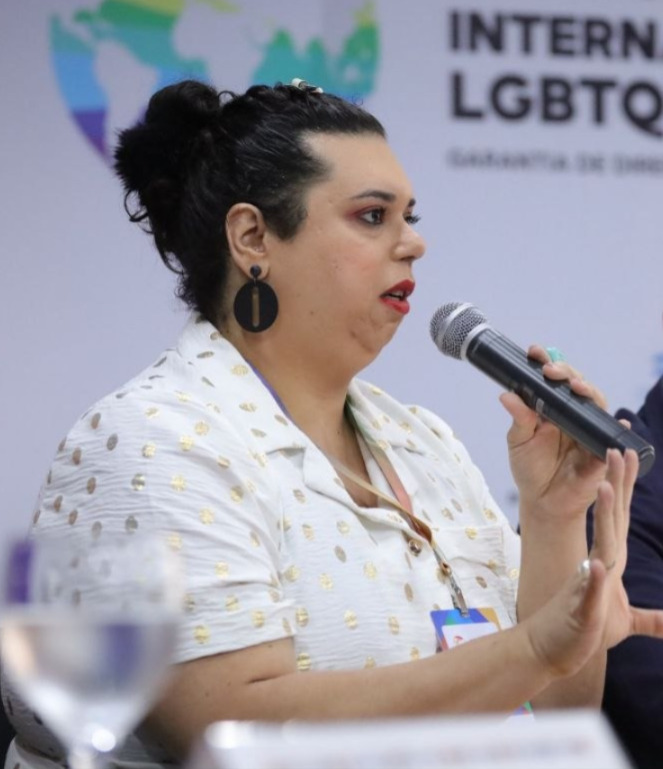
Hailey Kaas is a Latinx travesti, anthropologist, born in São Paulo, Brazil. She has been working for more than a decade in the fields of LGBTQIAP+ rights, women’s rights, and racial justice. Currently, she is the director of the CPT – Centro de Pesquisa Transfeminista (Transfeminist Research Center), a small organization dedicated to producing and promoting research/data primarily related to trans people in Brazil. She is also a graduate student at the University of São Paulo (USP), working towards a master’s degree in Humanities, Rights, and other Legitimacies.
Liked this article? Share it!


